
We See magazine is a women-only documentary photography magazine first published in 2018. Much of the featured work comes from participants in past femLENS’ workshops. Thanks to technological developments, today photography is easily accessible and can be used by a large group of people who have never had access to large audiences, or any audience. We See furthers our commitment to showcasing women from socially and culturally diverse backgrounds.
If you support or are interested in promoting women’s rights and equality in the photo industry, if you believe in challenging stereotypes and preconceived norms and ideas, We See magazine is for you! You may find inspiration for a project, or learn something new.
Support femLENS and We See magazine by sharing the PDFs with your community, or by ordering hard copies for your local community centre and library. Support diverse voices in visual storytelling!
Although you can download the magazines for free, we encourage you to make a one-time donation (via PayPal). All donations go towards future copies, workshops and more!

We See | Issue 1 — March 2018
Launched on International Women’s Day, the debut issue features work from femLENS workshops in Lebanon, Poland and Ireland. In Shatila refugee camp, Halima al-Haj and Faten Anbar photograph life in the alleys; in Dublin, Paula Haverty documents a community garden under threat; in Gdynia, Ewa Drewa and Magdalena Kostrzewska challenge how disability is seen. With essays on gender in media and an interview with founder Jekaterina Saveljeva, Issue 1 is where the We See mission begins: diversifying who tells the story.
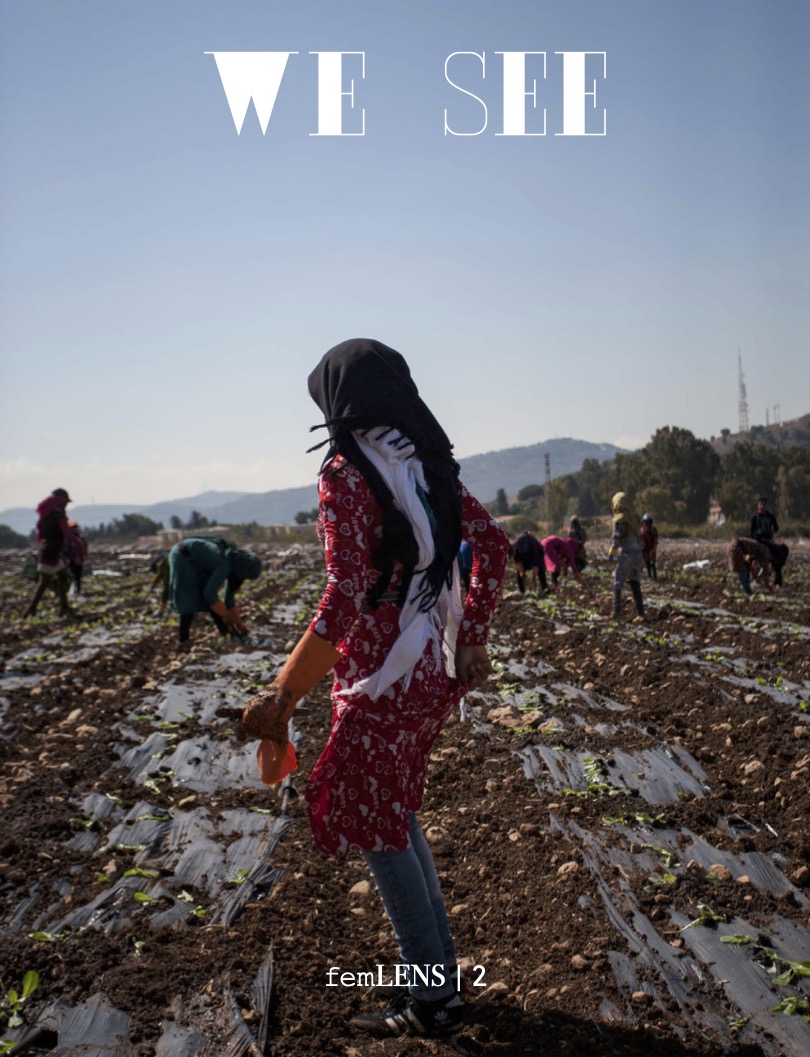
We See | Issue 2 — December 2018
Issue 2 focuses on human trafficking, pairing research with photographs from femLENS workshops in Zhytomyr, Ukraine and Torrox, Spain. Women and girls aged 14–64 document the conditions — rural depopulation, poverty, isolation — that make trafficking possible. Features include a conversation with Anette Funk on women’s rights, news of Halima Al Haj Ali’s photo prize win, featured photographer Sara Serpilli, and an essay by Dunja Bonacci Skenderović tracing the history of trafficking and sexual exploitation.

We See | Issue 3 — January 2020
Issue 3 asks what “women’s rights are human rights” really means, featuring work from femLENS workshops in Berlin run with International Women Space and the Art Despite Exclusion festival. Migrant and refugee women photographed alongside non-migrant women. Photo stories include Rasha Rahhal’s “Daughter,” Lica Stein’s “May 1,” and Anna Grillo’s “Brazilians.” Features include Claire O’Brien on women and migration, featured photographer Arlette Rhusimane Bashizi, Mai’a Williams on reclaiming titles, and Kerriann Marden viewing Gaza through a different lens.

We See | Issue 4 — December 2020
Issue 4 is dedicated to the pandemic year and how it shifted everything — from how we work and connect to how inequalities in digital access, gender and safety deepened. With workshops moved online, the issue spans Narva in Estonia, the Jordan Valley, Beirut and Mexico. Features include Jessica Couloute on digital disparity and gender inequality, featured photographer Emilia Martin, a COVID-19 collective project, and Halima Al Haj Ali’s images of the Beirut explosion. Photo stories range from Elena Kombolina’s city garden to Nivin inside the Jordan Valley.
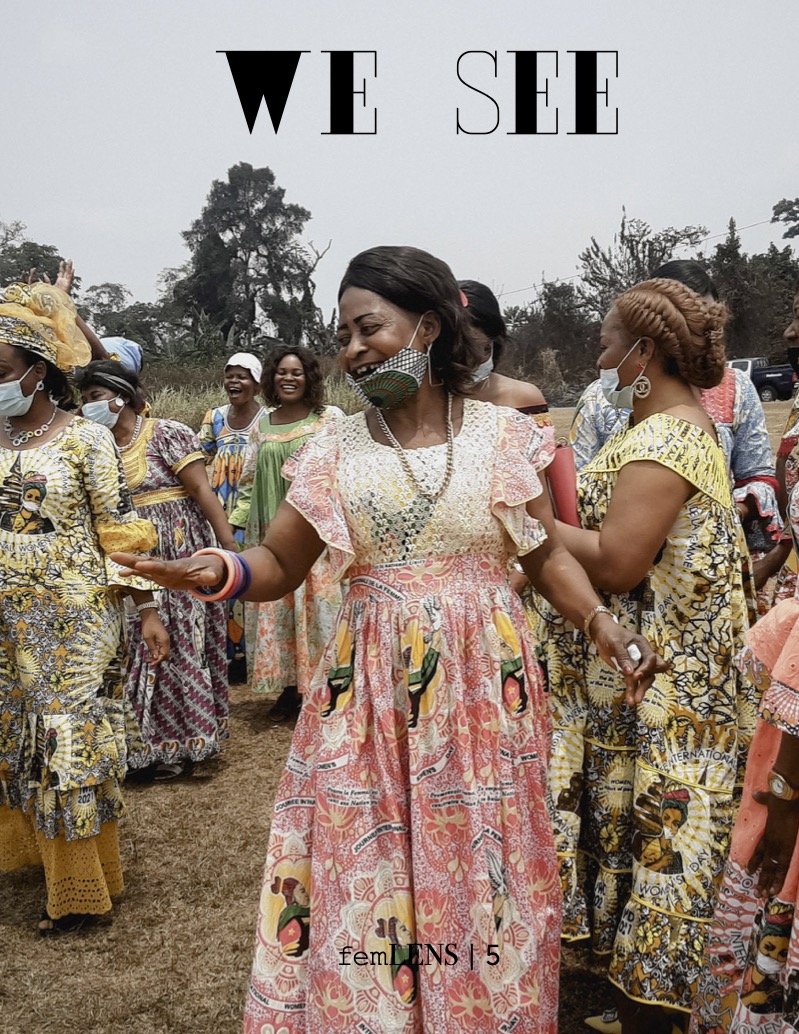
We See | Issue 5 — 2021
Under the banner “Think Global, Act Local,” Issue 5 connects environmental destruction to women’s rights across Cameroon and Ireland. Online workshops produced photo stories spanning deforestation in northern Cameroon, disappearing water, consumerism’s toll on Irish seals, and wasted resources. An IWD 2021 collective project brought together women from eight countries. Features include featured photographer Maria Kopytova, the “Picturing Women at Work” campaign, Elisa Mariotti’s “Impaused Pause,” and Rupali Ovhal on representation for the under-represented.
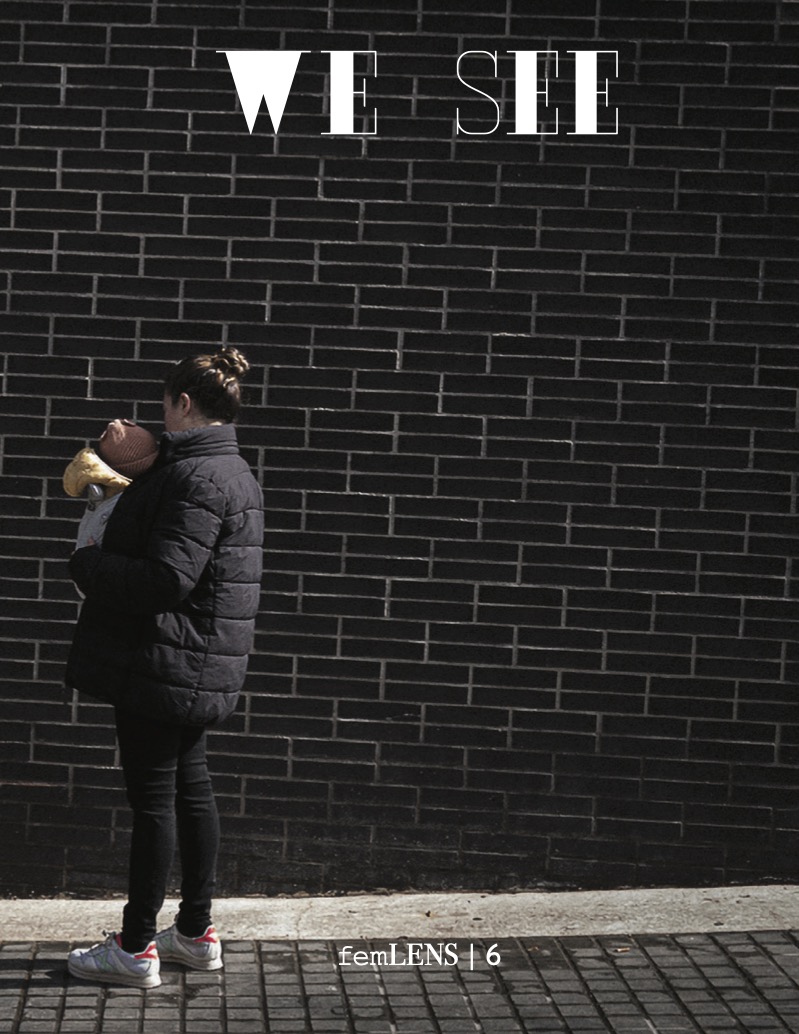
We See | Issue 6 — 2022
Issue 6 explores the power of feminist visual activism, tracing a line from the Hackney Flashers to femLENS’s own “Mothers at Work” campaign on women’s unpaid labour. Featuring work from workshops in Jerusalem and Ireland, the issue includes Palestinian photo stories by Nimat Natsheh and Alaa Shabanehs, featured photographer Fatemeh Behboudi, and essays on gender-blind medicine and housing rights. From Derry to Portugal, contributors document housing rights, sea keepers, and women not in the right place.

We See | Issue 7 — 2023
Issue 7 examines documentary photography as a tool for social advocacy. Maria Vesselko opens with an essay on how images transcend language to mobilise communities for change. Featured photographer Natalia Campos, a Brazilian photojournalist based in Dublin, discusses documenting protests and political moments. The issue spans photo stories of workshop participants from Malta, Greece and Portugal — Romina Delia’s “Purgatory,” young waitresses on the Athenian Riviera, and Rita Sales’s “Our School, Our Stories” — alongside interviews with collectives Fotoessa (Greece) and Boa Criação (Portugal).

We See | Issue 8 — 2024 (Welens Special Issue 1)
The first of four special issues produced as part of the EU-funded Welens project, Issue 8 examines how mainstream media fails to confront the systemic roots of gender-based violence — reducing it to sensationalism while perpetuating rape culture. Ten international partner organisations contribute essays on stigma, interculturality, trafficking in Mexico, cyber threats, and media’s role in perpetuating rape culture. Photo stories include Sushila Bishwakarma’s “Kaali” and Claudia Belaunde’s “Cuajojodie.”

We See | Issue 9 — 2024
Issue 9 presents the photographic stories of Afghan women living under Taliban rule and Palestinian women in Lebanese refugee camps, captured in the summer of 2024 before the autumn war with Israel. Maria Vesselko frames these as images of survival, resilience and ongoing resistance — not merely “before and after.” Afghan contributors document child labour, cycling as freedom, flower shops and empty school halls; Palestinian women photograph healing hands, threads and beads, cooing pigeons and the sea. Every image bears witness to lives that mainstream media routinely overlooks.

We See | Issue 10 — 2025 (Welens Special Issue 2)
The second Welens special issue uses the “GBV Tree” as its organising framework — roots in patriarchal norms, branches in physical, digital and economic violence, leaves in lasting trauma, and the political climate that lets it grow. Featured photographer Elisa Mariotti is joined by partner essays on intersectionality and substance dependence (NoGap), structural inequality in Martinique (D’Antilles et D’Ailleurs), camming as sexual trafficking (Élan Interculturel), cyber threats (KEMEA), and human trafficking in Argentina (MVT). Nabilla Djide contributes “Billboard Sweetener” and Beecom writes on art for change.

We See | Issue 11 — 2025 (Welens Special Issue 3)
Titled “Who Doesn’t Love a Challenge?”, Issue 11 drops the optimistic façade expected of non-profits to speak openly about what makes this work hard — burnout, shrinking budgets, far-right rollbacks of women’s rights, and the emotional labour of activism in rigid systems. Featured photographer Maggy Dago is joined by Welens partner essays on anti-immigrant rhetoric, housing instability, adolescent mothers in Guyana, cyber threats, prostitution beyond the rhetoric of choice, and trafficking in Argentina. femLENS contributes “The Activist’s Paradox” and Marina Dego reflects on 105 years of being a woman.
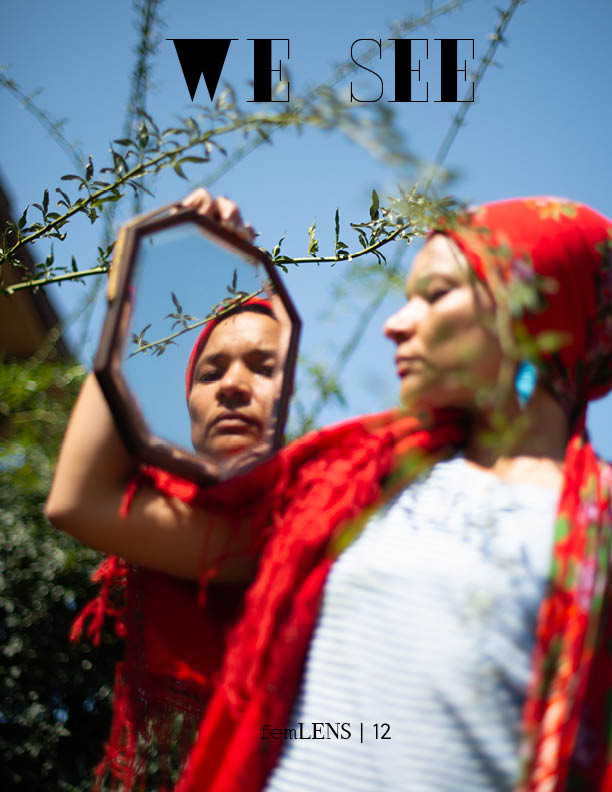
We See | Issue 12 — 2025 (Welens Special Issue 4)
The final Welens issue looks back at what the project achieved and forward to what endures. Elena Palaiorouta’s editorial reflects on how storytelling, cross-border collaboration and educational tools built a shared language for confronting gender-based violence. Featured photographer Amélie Pelletier is joined by partner contributions on digital prostitution in Argentina, algorithms and resistance in online campaigning, resilience tutoring, empowerment for adolescent mothers in Guyana, and digital safety in Greece. femLENS contributes “Photography — A Tool for All: Women and Community Learning.”